Cosmetic Dentistry from a Family Dentist
It is essential to visit a family dentist every six months to maintain proper oral health. While it is possible to keep…

Considering Invisalign®? Many people are beginning to look into this teeth straightening option as it is one that is discreet while still being effective. Additionally, it allows patients to be flexible with the treatment process. However, a concern that arises is whether Invisalign® affects speech, meaning the way people speak when wearing the aligners. With most oral appliances comes the possibility that there will be necessary adjustments. However, being aware of them ahead of time is what is important. Keep reading to find out more.
Below is a quick overview of Invisalign, including how it affects speech. When considering different teeth straightening options, it can be helpful to review the following information.
The Invisalign system consists of clear aligners that are used for both the bottom and top arch of teeth. They are removable single oral appliances that get changed out every few weeks over the course of a few months and typically up to a year. Invisalign is used to correct crooked teeth, crowding, protrusion, and minor bite issues such as under, over, or crossbites. Additionally, the aligners can be used to close small gaps between teeth.
Like most oral appliances, Invisalign requires patients to undergo a period of adjustment. The oral cavity may not be used to having an appliance in it at all times, which can result in awkward speech. Some patients report a small lisp or difficulty with proper pronunciation. For the most part, dentists advise Invisalign wearers to be patient with the adjustment period. Eventually, speaking while wearing the aligners will become more comfortable, resulting in normal enunciation.
In rare cases, some patients who wear Invisalign may struggle for a while to adjust to speaking with the aligners on. If this is the case, the dentist may recommend that the patient consults with a speech therapist so that the problem does not become long-term. Additionally, the dentist may be able to provide certain dental enhancements to help reduce speech problems that result from wearing the aligners.
While the concern of affected speech may discourage individuals considering Invisalign, it is important to know that ultimately, the treatment will address the outstanding oral issues. Speech problems can often be corrected with therapy, whereas bad oral health as a result of crowding or crookedness can last forever if ignored.
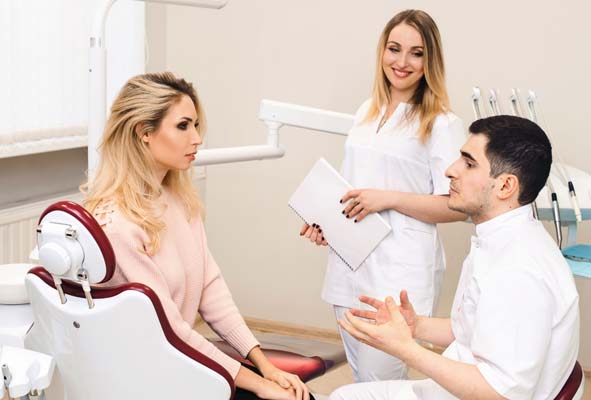
Dentists are trained to tackle any issues that arise as a result of Invisalign treatment, which is why it is worth undergoing a consultation. An evaluation can be done to determine if the patient's speech would be a concern during treatment.
Looking for more information on Invisalign®? The best place to start is by consulting with a general dentist who can perform an evaluation. Additionally, the patient can ask questions and go over concerns about the treatment process. Reach out today to get scheduled for an appointment or to learn more.
Request an appointment here: https://www.alamodentistry.com or call Alamo Family Dentistry at (805) 259-1149 for an appointment in our Simi Valley office.
Check out what others are saying about our dental services on Yelp: Invisalign in Simi Valley, CA.
It is essential to visit a family dentist every six months to maintain proper oral health. While it is possible to keep…
Dental sleep medicine can help with snoring and obstructive sleep apnea, which are two common sleep problems. Snoring is one of the…
Regular visits to a general dentist are an essential component of good health and overall wellness. It is important for both adults…
Many people avoid visits to the general dentist because they are afraid of what might be found on their teeth. Cavities are…

It is essential to visit a family dentist every six months to maintain proper oral health. While it is possible…

Dental sleep medicine can help with snoring and obstructive sleep apnea, which are two common sleep problems. Snoring is one…
Regular visits to a general dentist are an essential component of good health and overall wellness. It is important for…